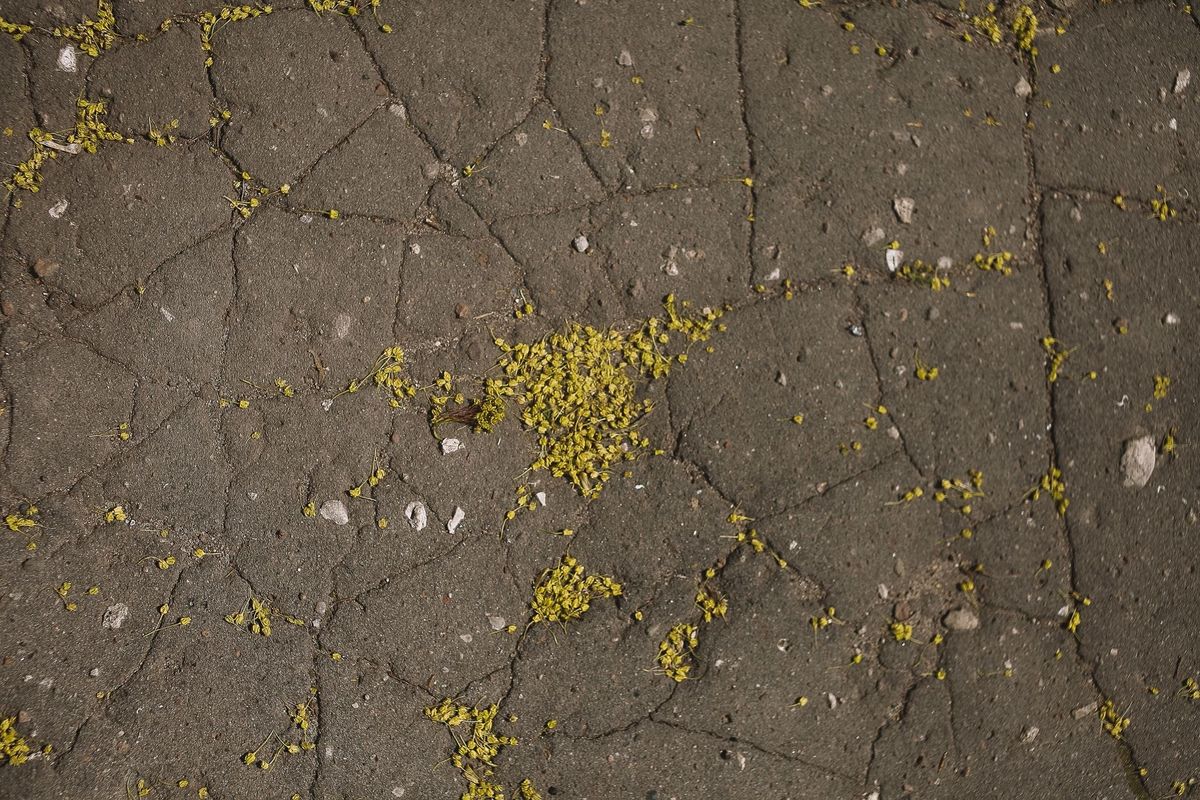
When a Iowa City sidewalk slab or driveway lifts and cracks over the winter, frost heave is often the cause. A classic National Research Council Canada building digest (CBD 26, 1962, now archived as a historical reference) explains that damage to driveways, walks and similar structures comes from growing ice crystals that draw water from the surrounding soil and form ice lenses. [NRC Canada CBD 26]
How frost heave works
Heaving needs three things: a freezing plane in the soil, a fine-grained soil that moisture can move through, and a supply of water. Control any one and heaving can be prevented. [NRC Canada CBD 26]
Vertical movements of 4 to 8 inches are not unusual, and as much as 24 inches has been reported. [NRC Canada CBD 26]
Coarse sands and clean gravels generally don't heave, while fine sands and silts are very susceptible. Clays heave slowly but often with tremendous pressure. [NRC Canada CBD 26]
As ice lenses thaw in spring, they add water to the soil, which can soften the subgrade and leave paving without support. [NRC Canada CBD 26]
Undisturbed snow insulates the ground; each foot of it reduces the depth of soil freezing by about the same amount. [NRC Canada CBD 26]
What helps
Heaving is usually prevented by replacing fine-grained soil with coarse granular material, and careful drainage greatly reduces it. [NRC Canada CBD 26]
For driveways, the digest says 6 inches of clean granular fill adds support during the spring thaw, and keeping movement small helps avoid cracks that let water into the subgrade. [NRC Canada CBD 26]
Direct runoff from buildings away from critical areas with proper landscaping, which also improves subgrade drainage. [NRC Canada CBD 26]
The digest itself tells readers to check with design and regulatory experts on how its guidance applies to current construction, so ask a local concrete contractor about base and drainage before you replace a heaved slab. [NRC Canada CBD 26]
 IOWA CITY